
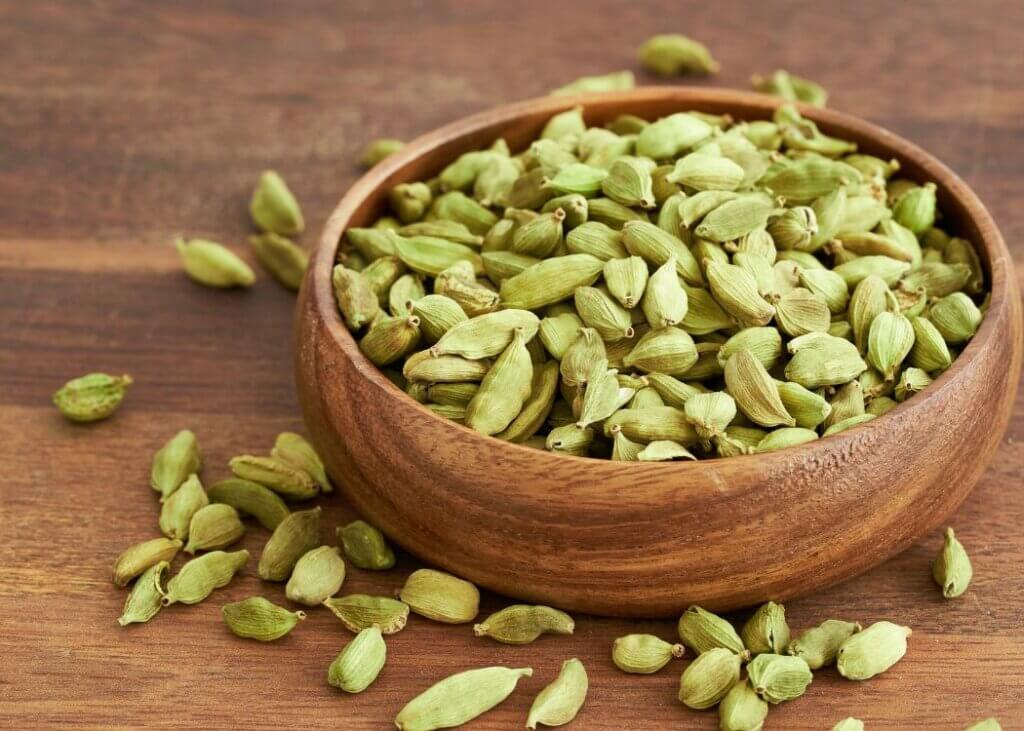
We supply premium Indian green cardamom — 7 to 8mm bold grade pods — from Dubai, packed in 500 gram retail units, at AED 125 plus VAT per kilogram. The product is in stock. It is ready to move. And it is available for retail buyers, wholesale distributors, food manufacturers, and export traders across the UAE, Saudi Arabia, Kuwait, Qatar, Oman, Iraq, Iran, and beyond.
Submit Your Details to Receive a Personalized Quote
What We Are Offering
Product: Green Cardamom, Whole Pods
Origin: India
Pod Size: 7 to 8mm
Packing: 500 gm per pack, hygienically sealed
Price: AED 125 plus VAT per kg
Quality: 100% natural, no added colour, no coating, no artificial fragrance
Stock: Available now from Dubai
This is not a generic listing. It is a specific, traceable product sourced from India’s established cardamom-growing belt and packed to preserve the natural aroma that makes Indian cardamom worth paying for.
Why the Size Matters
Cardamom is graded by pod diameter, and that number directly tells you what you are getting.
At 7 to 8mm, you are in the bold premium range. The pods are plump, well-formed, and visually striking. They carry a higher seed-to-shell ratio, which means more of the essential oils that produce cardamom’s signature aroma. The volatile compounds responsible for that distinctive warm, sweet-cooling fragrance, particularly 1,8-cineole and alpha-terpinyl acetate, are more concentrated in larger, mature pods.
Smaller pods (5 to 6mm) have thinner walls and lower oil content. They are cheaper, and the difference shows in your cup and in your recipe. The 7 to 8mm range is the commercial sweet spot that premium buyers across the GCC, Iraq, and South Asia have standardised around.
Indian Origin and Why It Is Not Interchangeable
There are two main origins in the global cardamom trade: India and Guatemala. Both are commercially significant. They are not the same.
Indian cardamom grows in the high-altitude hill regions of Kerala, Karnataka, and Tamil Nadu, in conditions that have made India the reference point for aromatic quality for centuries. The essential oil content in Indian cardamom consistently runs higher than Guatemalan varieties, and the flavour profile is distinct. Indian cardamom has a richer, more complex aromatic character with a camphor-forward cooling quality. Guatemalan cardamom tends toward sweeter, more eucalyptus-dominant notes.
That difference is not trivial in the Gulf. Arabic qahwa is built around Indian cardamom. The producers who make it commercially, and the households who brew it at home, can taste the difference. When a UAE restaurant specifies Indian-origin cardamom for their qahwa service, they are protecting a quality promise they have made to their guests.
We source from established Indian procurement networks and can confirm origin on documentation. What arrives at your door is genuinely what the bag says.
500 Gram Pack and Who It Serves
The 500 gram unit is not a standard retail afterthought. It is the most commercially practical cardamom format across several different buyer types simultaneously.
Household buyers in the UAE and GCC purchase 500 gram as a replenishment quantity that lasts through regular cooking and daily chai without expiring before it is finished. The sealed format keeps the essential oils from dissipating between uses.
Spice retailers in Deira, Sharjah, Naif, and across Gulf wholesale districts move 500 gram units as a core SKU. It is the size their customers ask for, it sits well on a shelf, and the margin is better than smaller packs.
Traders who buy for re-packing under their own brand purchase our 500 gram units as their base material, then consolidate and re-pack into 100 gram and 200 gram consumer units at their own facility.
Food manufacturers and beverage companies working in larger volumes can discuss bulk quantities directly with our team.
The GCC Market
Gulf consumption of cardamom is not seasonal or occasional. It is daily and structural.
Arabic coffee, qahwa, is served at every social occasion across Saudi Arabia, UAE, Kuwait, Qatar, Bahrain, and Oman. It is brewed with cardamom as the defining ingredient, and it flows constantly at weddings, majlis gatherings, business meetings, and family visits. A household without cardamom cannot serve guests properly. That is not an exaggeration of Gulf social culture.
Karak chai, the sweet cardamom-spiced tea consumed multiple times daily across the UAE and Qatar in particular, represents an enormous additional consumption stream. The number of karak stalls, cafes, and corner tea shops in Dubai alone running through cardamom daily is significant.
Beyond beverages, cardamom appears in machboos, kabsa, luqaimat, Gulf-style rice dishes, and a growing category of cardamom-infused confectionery and chocolates that have expanded in Gulf retail over the past five years.
Saudi Arabia is one of the world’s largest cardamom importing nations despite having no domestic production. The UAE’s position as a re-export hub means Dubai-based cardamom stock flows into Saudi Arabia, Qatar, Kuwait, and the wider region through established distribution networks.
Iraq
Iraq is a large and often underestimated market for premium spices.
The Iraqi kitchen uses cardamom extensively. Hel (هيل) appears in qahwa, in chai, in kleicha (the traditional date-filled pastry central to Iraqi culture), and across the savoury spice blends that define Iraqi cooking. A population of 42 million people in a country with rapid urban growth and a rebuilding food import infrastructure represents serious commercial scale.
Most Iraqi spice importers operate through Dubai. They source in UAE, arrange documentation, and ship into Iraq via Basra Port or the Trebil land crossing. The AED 125 plus VAT per kilogram pricing from our Dubai warehouse gives Iraqi buyers a clean, traceable source with straightforward payment and export documentation.
Baghdad, Basra, Erbil, and Mosul all have active spice wholesale markets. The buyers supplying those markets who are not already sourcing from us are worth a conversation.
Iran
Iran has a deep and specific relationship with cardamom. Persian tea culture, which runs through daily life in a way few outsiders fully appreciate, regularly incorporates cardamom. It appears in Persian rice dishes, in traditional sweets like bastani, in herbal blends, and in the kind of slow hospitality that Iranian culture has maintained for generations.
The Dubai-to-Iran trade corridor is well-established. Bandar Abbas handles the largest share of UAE-origin goods entering Iran, and traders with buyer relationships on both sides of the Gulf move product through this channel regularly. We provide complete commercial documentation to support onward shipment.
Iranian traders and importers looking for a consistent, quality-documented source of Indian green cardamom at a fair Dubai-based price should contact our team directly.
Pakistan and South Asia
Cardamom, elaichi in Urdu, is the spice of Pakistani celebration cooking. Biryani, halwa, kheer, sheer khurma, and the daily chai that anchors Pakistani domestic life all rely on it. Pakistan’s 240 million population drives serious demand, with the Karachi wholesale spice market at Jodia Bazaar trading in significant volumes.
Pakistani traders operating through Dubai are consistent cardamom buyers, sourcing Indian-origin product from UAE for re-export. Sri Lanka and Bangladesh represent additional South Asian demand channels we serve through our Dubai-based stock.
Quality and Packing Standards
Each 500 gram pack contains pods that have been graded for the 7 to 8mm size range. Undersized, discoloured, or damaged pods are removed before packing. The sealed format is designed to retain the natural green colour and aromatic oils from packing through to consumption.
No artificial colour is added. No mineral oil coating. No moisture enhancement. The green you see is natural, maintained through appropriate Indian processing and drying practices.
Asia & Africa Foodstuff Trading: Two Decades of Dubai Heritage
Get in Touch
For inquiries and booking:
– WhatsApp or Call: +971 55 956 9371
– Email: sales@agro-factory.com
– Head Office: Al Ras Market, Dubai – UAE
Frequently Asked Questions
What makes 7 to 8mm cardamom different from smaller grades?
Pod size correlates directly with essential oil content and aromatic intensity. Larger pods have a higher seed-to-shell ratio, meaning more of the volatile compounds that produce cardamom’s fragrance. The 7 to 8mm grade delivers a noticeably richer aroma than 5 to 6mm pods, which is why it is the preferred grade for qahwa production, premium spice retail, and quality-focused food manufacturers.
Is this Indian or Guatemalan cardamom?
Indian origin, sourced from established supply networks in Kerala, Karnataka, and Tamil Nadu. Indian cardamom has a distinct aromatic profile that Gulf, Iraqi, Iranian, and South Asian food cultures are built around. We can confirm origin on documentation.
Can I buy wholesale quantities for export to Iraq or Iran?
Is this suitable for commercial qahwa production?
Yes. The 7 to 8mm Indian green cardamom is the specification used by commercial qahwa producers and cafes across the GCC. The high essential oil content and authentic Indian origin deliver the aromatic depth that Arabic coffee requires.
What documentation is provided?
We supply commercial invoice and packing list as standard. Certificate of Origin, phytosanitary certificate, and other export documentation can be arranged for buyers shipping onward to Iraq, Iran, Pakistan, or other markets. Contact us to discuss your specific documentation requirements.
What documentation is provided?
Do you supply cardamom powder as well?
Our current offer is whole pods, 7 to 8mm grade. For ground cardamom powder, contact us to check current availability from our spice range.
Where is Asia & Africa General Trading located?
Our office is located in Dubai, at Al Shizawi Building – Al Ahmadiya St – Deira – Al Ras(Near Al Ras Metro Station). You can easily find us on Google Maps or contact us directly for any assistance you may need in finding us. We look forward to serving you!
Other Products We Supply
We are a full-range food commodity trading house, not just a spice supplier. Alongside cardamom, buyers across the GCC, Iraq, Iran, and South Asia can source:
Samad brand cumin seeds from Mundra Port at Singapore and Europe grade specifications. Lal Pari Indonesian whole cloves delivered CIF Jeddah. Indian-origin pulses and spices for Libya, including chickpeas, turmeric, chilli powder, and coriander. White refined sugar in UAE-made Al Khaleej IC45 and Indian Renuka IC45 grades. Red split lentils on CIF terms to Mombasa and Port Sudan. Fonterra NZMP whole milk powder from Sharjah Free Zone. Chia seeds from Paraguay on CIF terms to India, Pakistan, and Oman.
Sourcing multiple commodities through one supplier reduces documentation complexity, freight cost, and the administrative overhead of managing multiple vendor relationships.