In Nairobi they call it a tuk-tuk. In Kano and Lagos it runs alongside the okadas as a passenger and cargo workhorse. In Kampala and Dar es Salaam it navigates the narrowest market lanes that no bus can reach. In Khartoum and Addis Ababa it fills the gap between walking and expensive private transport for millions of daily commuters. Whatever name it carries in your market, the Bajaj three-wheeler is one of the most commercially proven light vehicles operating across Africa right now.
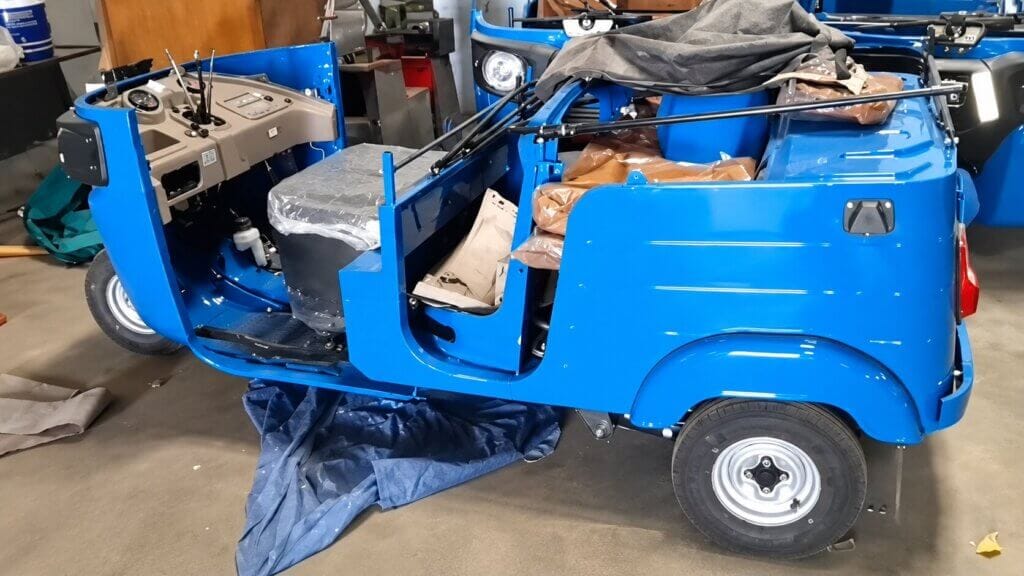
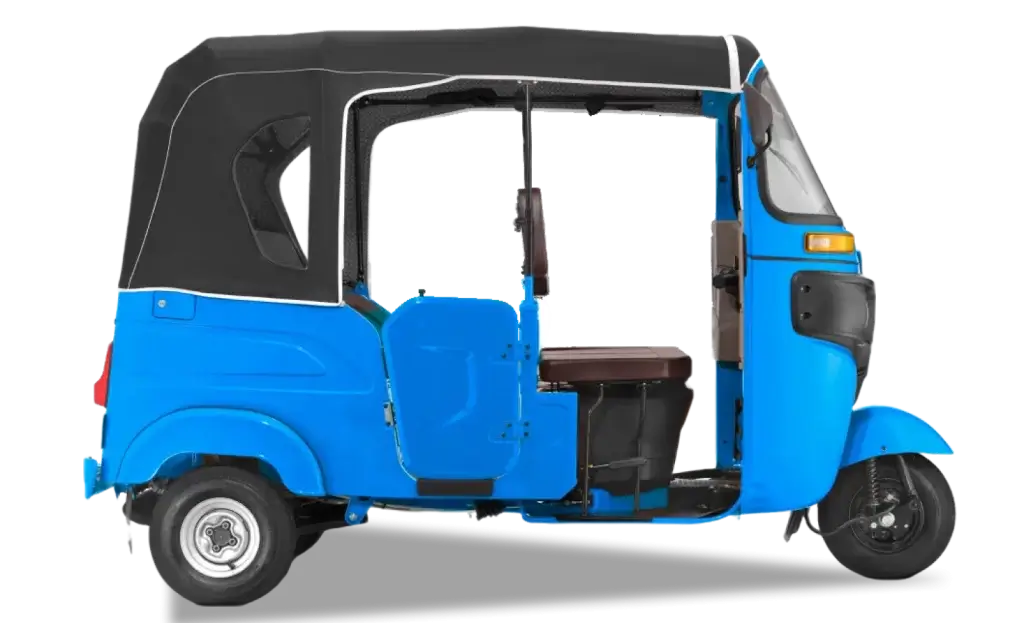
Asia & Africa General Trading FZE LLC is offering the Bajaj RE 4S Compact BS6 2026 model at USD 3,620 per unit FOB Mundra Port, India, in SKD (Semi Knocked Down) condition. Six units load per 40-foot container. September 2026 shipment is confirmed. Each vehicle comes complete with a petrol tank, and colour of vehicle and hood are buyer’s choice, all inclusive in the price.
This offer is directed at vehicle importers, fleet operators, transport entrepreneurs, and commercial dealers across Africa who are sourcing three-wheelers for passenger transport, last-mile delivery, or distribution fleet operations.
Submit Your Details to Receive a Personalized Quote
Vehicle and Order Details
Vehicle: Bajaj RE 4S Compact
Model Year: 2026
Engine Standard: BS6 (Bharat Stage 6 emission standard)
Fuel: Petrol
Condition: SKD (Semi Knocked Down)
Price: USD 3,620 per unit FOB Mundra Port, India
Container Loading: 6 units per 40-foot container
Colour: Buyer’s choice
Hood: Buyer’s choice
Shipment: September 2026 from India
Payment Terms: 50% advance payment required to initiate the order. 50% at the time of container loading. Balance against original shipping documents. Dispatch within 30 days after advance payment is received.
Why the Bajaj RE 4S Compact Sells Across Africa
Bajaj Auto is not a newcomer to Africa. The company has been supplying motorcycles and three-wheelers to African markets for decades and has built a distribution, spare parts, and after-sales infrastructure across more than 25 African countries. The Bajaj RE brand is one of the most trusted three-wheeler series in the world, with over 6 million satisfied owners across global markets.
That track record matters for African buyers beyond the brand name. A vehicle with 6 million owners across developing markets means that spare parts are available, that local mechanics have experience servicing it, and that the design has been refined across hundreds of thousands of operating hours in exactly the road conditions that African urban and peri-urban environments present. When a vehicle breaks down in Kampala or Kano, a buyer needs to know that a replacement part can be sourced quickly and that a mechanic in the local market knows the vehicle. Bajaj delivers on both counts in a way that newer or less-established three-wheeler brands cannot match.
The BS6 emission standard on the 2026 model makes it compliant with modern fuel efficiency and emission regulations, which is increasingly relevant as African cities and regulatory authorities align their vehicle import standards with international norms. Buyers who are investing in a fleet operation want vehicles that will clear customs and operate legally across the life of the investment.
The 4S designation refers to the four-stroke petrol engine, which is quieter, more fuel-efficient, and lower in maintenance cost than older two-stroke variants. For a vehicle running ten to twelve hours per day in a commercial transport or delivery operation, fuel cost is one of the largest operating expenses. Four-stroke efficiency makes a direct and daily difference to the economics of the vehicle.
What SKD Means and Why It Works for Africa
SKD stands for Semi Knocked Down. The vehicle is partially disassembled for shipping, packed into a container in component form, and then reassembled at the destination. This is different from CKD (Completely Knocked Down), where the vehicle is fully disassembled, and from CBU (Completely Built Up), where the vehicle ships as a ready-to-drive unit.
SKD offers a practical middle ground that suits African markets for several reasons.
Packing six units into a single 40-foot container in SKD condition maximises the shipping density and reduces the per-unit freight cost significantly compared to shipping fully assembled three-wheelers. This is a direct cost saving that passes through to the buyer’s landed cost calculation.
SKD shipments also attract more favourable import tariffs in several African countries compared to CBU vehicles, where import duties on fully assembled vehicles can be substantially higher than duties on parts and components. Buyers in countries where this tariff differential applies should confirm the import duty position for SKD three-wheelers with their local customs authority or clearing agent before finalising the order.
The reassembly process for Bajaj SKD three-wheelers is not complex. Bajaj has designed the RE for markets where assembly is done outside India, and experienced mechanics in most African markets with a Bajaj service background can complete the reassembly process efficiently.
The African Three-Wheeler Market: What the Numbers Say
The Africa two-wheeler market was valued at USD 3.68 billion in 2025 and is projected to reach USD 6.51 billion by 2030 at a compound annual growth rate of nearly 10 percent. The three-wheeler segment within that market is growing alongside it, driven by urbanisation, rising demand for affordable commercial transport, and the expansion of last-mile delivery services across African cities.
Nigeria, Tanzania, and Kenya are the leading import markets by value for vehicles in this category, together accounting for 42% of total African imports. A secondary group including Uganda, Guinea, Cameroon, Mali, South Africa, Ghana, and Sudan constitutes a further 28% share.
Bajaj Auto plays a pivotal role in shaping vehicle ownership trends in Africa, having successfully penetrated key markets including Ethiopia, Tanzania, and Uganda. That established presence means the brand does not need to build credibility from scratch in each new market. Dealers, fleet buyers, and transport operators across these countries already know the Bajaj RE series and have existing relationships with spare parts suppliers and service networks.
Where This Vehicle Sells in Africa
Nigeria
Nigeria commanded 42.61% of continental two-wheeler and three-wheeler volume in 2025. The country’s enormous population, rapid urbanisation, and the deep entrenchment of commercial transport operators in cities like Lagos, Kano, Abuja, Port Harcourt, and Onitsha make it one of the most active markets for commercial three-wheelers in Africa. Keke NAPEP, as the three-wheeler is known in Nigeria, is a licensed and regulated passenger transport mode in many Nigerian states and is one of the most common income-generating vehicles for small transport entrepreneurs.
Kenya
Kenya was the largest consumer of motorcycles and three-wheelers on the continent by volume from 2020 to 2024. Nairobi’s traffic congestion, the density of its informal settlement networks where standard vehicles cannot operate, and the growth of ride-hailing and delivery services using three-wheelers all drive consistent demand. The tuk-tuk operates under a regulated licensing framework in Nairobi and is increasingly being adopted for last-mile parcel delivery by e-commerce and logistics companies.
Tanzania and Uganda
Both countries have large urban markets, Dar es Salaam and Kampala respectively, where three-wheelers are used for both passenger transport and cargo. The Bajaj brand has particularly strong recognition in both markets through the Bajaj East Africa distribution network.
Sudan and South Sudan
Sudan’s market has consistent demand for affordable commercial vehicles, and three-wheelers serve both passenger transport and cargo roles in Khartoum, Omdurman, and secondary cities. South Sudan, rebuilding its commercial transport infrastructure, represents a growing opportunity for importers who can supply quality vehicles at a competitive price.
Ghana, Ethiopia, Senegal, Cameroon, and the Francophone West Africa Region
All of these markets have active three-wheeler sectors at various stages of regulatory development and commercial maturity. Ethiopia in particular has seen significant growth in Bajaj three-wheeler adoption in Addis Ababa and secondary cities.
The Economics of a Three-Wheeler Operation in Africa
For buyers who are purchasing for their own fleet operation or for resale to small transport entrepreneurs, the economics of the Bajaj RE 4S Compact work as follows.
At USD 3,620 FOB Mundra, the landed cost in your market will include ocean freight from India (variable by destination but typically USD 800 to 1,500 per container for a 40-foot, divided across 6 units), import duty at your country’s applicable rate for SKD three-wheelers, port handling and local transport to your warehouse, and reassembly costs. The total landed cost per unit varies by country and import duty structure, but the USD 3,620 FOB starting point positions this vehicle competitively relative to alternative origins and used vehicle alternatives in most African markets.
A transport operator running a tuk-tuk or keke NAPEP in a city like Lagos, Nairobi, or Kampala on a typical commercial day can generate revenue that allows full vehicle cost recovery within 18 to 30 months depending on the market’s fare structure and operating hours. That payback period makes the Bajaj RE 4S an attractive investment for small transport entrepreneurs with access to vehicle finance or a one-time capital base.
Colour and Hood Choice: What This Means for Your Order
Every vehicle in this offer comes with buyer’s choice of colour and hood, all inclusive in the USD 3,620 price. This matters commercially because different African markets have different regulatory requirements and commercial conventions around vehicle colour.
In Nigeria, commercial keke NAPEP vehicles are typically required to be in specific colours by state transport authorities. In Nairobi, tuk-tuks often display specific colours associated with licensed operators or corporate fleet owners. In other markets, colour is a personal or brand choice for the fleet operator.
Confirming your required colour and hood specification at time of order ensures the vehicles are manufactured and packed to your exact requirement before shipping. This is not an afterthought in the SKD process — it is specified at the factory before the vehicle is assembled and packed for export.
Get in Touch
For inquiries and booking:
– WhatsApp or Call: +971 55 956 9371
– Email: sales@agro-factory.com
– Head Office: Al Ras Market, Dubai – UAE
Frequently Asked Questions
What does BS6 mean and why does it matter for Africa?
Can I order fewer than 6 units (less than a full container)?
How long does reassembly take at the destination?
Are spare parts readily available in Africa?
Can you quote CIF to my port instead of FOB Mundra?
What warranty applies to the vehicle?
Where is Asia & Africa General Trading located?
Our office is located in Dubai, at Al Shizawi Building – Al Ahmadiya St – Deira – Al Ras(Near Al Ras Metro Station). You can easily find us on Google Maps or contact us directly for any assistance you may need in finding us. We look forward to serving you!