
Pakistan has been exporting rice to Asia for decades, and the Irri-6 variety from Sindh and Punjab sits at the centre of that trade. It is not the most glamorous rice in the international market, but for buyers in China and the Philippines who are sourcing broken rice for food manufacturing, animal feed compounding, starch processing, or the rice flour production that supplies the region’s food industry, it is exactly what they need at a price that makes the numbers work.
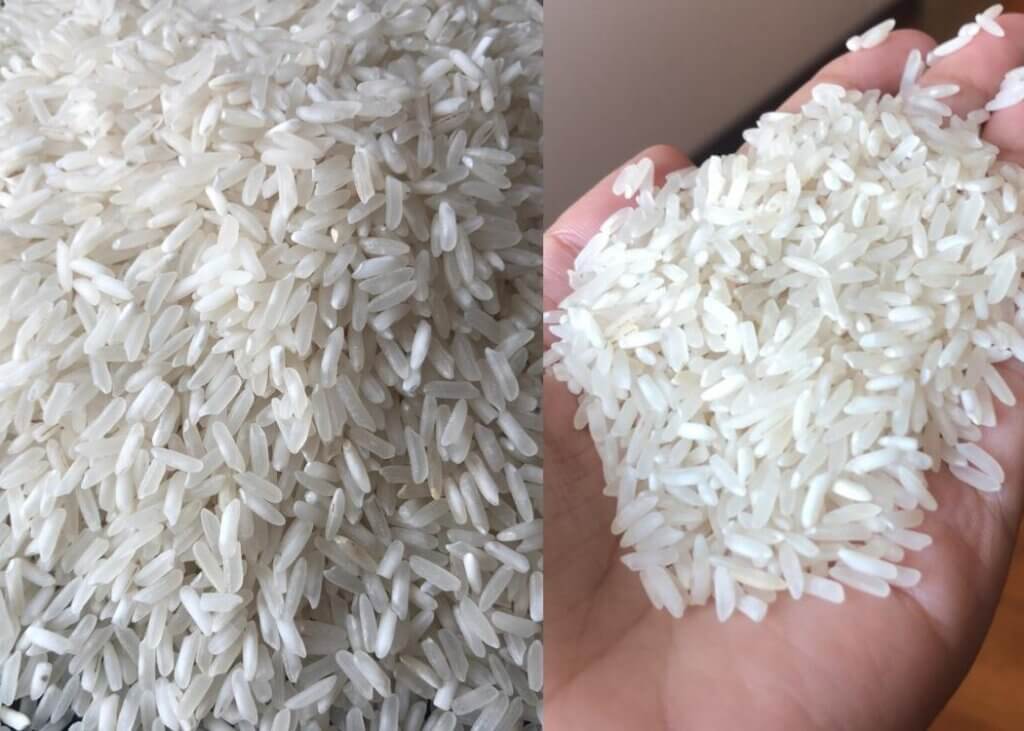
Asia & Africa General Trading FZE LLC is offering Pakistan Long Grain Irri-6 Broken Rice from the 2025-2026 crop in two specifications: 5% silky sortex and 100% silky sortex broken. Both are available CNF to Shekou, Qingdao, and Shanghai in China, and to Subic Bay and Manila in the Philippines, with August 2026 delivery and packing in 25 kg PP bags. Prices are indicative and subject to final written confirmation.
Submit Your Details to Receive a Personalized Quote
Price Matrix — Pakistan Irri-6 Broken Rice 2025-2026 Crop
5% Silky Sortex Broken Rice (Long Grain Irri-6)
Destination | CNF Price |
|---|---|
Shekou / Qingdao / Shanghai, China | USD 399 per MT |
Subic Bay / Manila, Philippines | USD 424 per MT |
100% Silky Sortex Broken Rice (Long Grain Irri-6)
Destination | CNF Price |
|---|---|
Shekou / Qingdao / Shanghai, China | USD 313 per MT |
Subic Bay / Manila, Philippines | USD 338 per MT |
Packing: 25 kg PP bags
Delivery: August 2026
Crop year: 2025-2026
Note: All prices are indicative and subject to final written confirmation.
Irri-6 and the Broken Rice Market
Irri-6 is a semi-dwarf, high-yielding long grain rice variety developed by the International Rice Research Institute (IRRI) and extensively cultivated across Pakistan’s Sindh and Punjab provinces. It is a non-basmati variety, which means it does not carry the premium aromatic profile that Pakistani basmati commands, but it makes up for that in yield efficiency, availability, and a price point that makes it the commercial workhorse of Pakistani rice export volumes outside the basmati segment.
Broken rice refers to grains that have fractured during milling. In the consumer market for whole-grain rice, broken rice is a downgrade. In the food manufacturing and processing industry, it is often the preferred specification, and sometimes the only practical one, because it performs differently from whole grain in several ways.
Broken rice has a higher surface area to mass ratio, which means it hydrates faster and gelatinises more evenly during cooking and processing. For starch extraction, rice flour milling, and fermentation applications where the rice is being processed rather than served whole, broken specification is not a compromise. It is the correct input.
Two Specifications Explained
5% Silky Sortex Broken Rice means the rice has been processed through sortex optical sorting equipment, which removes discoloured grains, foreign material, and off-grade material, with a broken grain content of up to 5% by weight. This is a higher-quality specification where broken grains are controlled at a low level, making it suitable for applications where a predominantly whole or near-whole grain is desired but at broken rice pricing. Buyers who want functional performance from sortex cleaning without the full broken specification often use this grade for blending, specific food manufacturing applications, or markets that prefer a cleaner visual presentation.
100% Silky Sortex Broken Rice is precisely what the name describes. All of the rice in this specification is broken grain, sortex cleaned for colour and quality consistency. This is the industrial specification used by rice flour manufacturers, starch processors, rice noodle producers, breweries and distilleries using rice as a fermentation substrate, and animal feed compounders who value the protein and carbohydrate profile of broken rice as a feed ingredient. The price difference between 5% broken at USD 399 per MT CNF China and 100% broken at USD 313 per MT CNF China reflects the commercial reality that broken rice commands a structural discount versus whole-grain rice, even when the sortex quality is the same.
China: Why This Market Buys Pakistani Broken Rice
China is the world’s largest rice producer, but it is also a significant rice importer, particularly for specific grades and specifications that serve industrial rather than consumer purposes. Several dynamics drive Chinese demand for Pakistani broken rice in 2026.
China’s rice flour and rice starch manufacturing sector is large and growing, serving the country’s food processing industry, the cosmetics and pharmaceutical sectors that use rice starch as an excipient and coating agent, and the export-oriented processed food companies that supply Chinese-branded products to global markets. These manufacturers source broken rice as their primary raw material because it is cheaper than whole grain and gelatinises more efficiently in their processing equipment.
The Chinese brewing and distilling sector uses rice as a substrate in certain production processes, and broken specification provides the right starch accessibility for these applications.
For feed compounders, broken rice provides a consistent, high-energy carbohydrate ingredient for poultry and aquaculture feed, sectors that are enormous in China and require reliable grain ingredient supply.
The three Chinese ports in this offer, Shekou (Guangdong), Qingdao (Shandong), and Shanghai, cover the three major manufacturing and distribution zones of coastal China. Shekou serves the Pearl River Delta, China’s most industrialised manufacturing corridor. Qingdao serves the Shandong industrial cluster and distribution into North China. Shanghai serves the Yangtze Delta manufacturing zone and provides onward distribution capability through China’s domestic logistics network.
Philippines: Rice Import Dynamics
The Philippines is one of Southeast Asia’s most significant rice importing nations. Despite being a rice-growing country, domestic production consistently falls short of consumption, and the country has been one of the world’s top rice importers in recent years. Philippine government rice importation policy, which has moved through several phases of liberalisation and regulation, continues to leave commercial import channels active for both milling rice and food manufacturing input.
Pakistani broken rice CNF Subic Bay and Manila arrives at a competitive price that works for Philippine rice processors and food manufacturers. Subic Bay, with its free port zone status, offers streamlined customs procedures for certain import categories. Manila handles the largest share of commercial food imports for the domestic Philippine market.
Rice noodle manufacturers, rice cracker producers, rice flour millers, and animal feed compounders in the Philippines all represent potential buyers for this offer. The Philippine aquaculture sector, which is substantial and requires consistent grain-based feed ingredient supply, is another relevant market segment.
Why Pakistan Crop 2025-2026
The 2025-2026 crop designation matters because it places this rice within the most recent Pakistani growing season. Buyers in China and the Philippines who are purchasing rice flour milling input or animal feed ingredient want fresh crop grain because it has lower free fatty acid content, better starch functionality, and lower risk of pest infestation or mycotoxin development compared to older stock that has been in storage.
Pakistan’s rice harvest runs from September to November, which means 2025-2026 crop rice processed and packed by July or August 2026 is approximately 9 to 11 months from field. For broken rice going into industrial applications, this is a fresh and commercially appropriate stock age.
Asia & Africa Foodstuff Trading: Two Decades of Dubai Heritage
Get in Touch
For inquiries and booking:
– WhatsApp or Call: +971 55 956 9371
– Email: sales@agro-factory.com
– Head Office: Al Ras Market, Dubai – UAE
Frequently Asked Questions
What is the difference between 5% and 100% broken rice in practical terms?
5% broken contains mostly whole grains with up to 5% broken pieces by weight, making it suitable for applications where visual appearance matters or where whole grain functionality is needed. 100% broken is entirely fractured grain, used in industrial processing, milling, feed compounding, and brewing where grain integrity is irrelevant and price efficiency matters more.
Is this rice suitable for human consumption?
Both specifications are food grade and suitable for human consumption applications including rice flour, rice noodles, rice crackers, and other processed food manufacturing. For direct table rice consumption, 100% broken is not the typical consumer preference, but it is not a safety or quality concern.
What pests and mycotoxin documentation is available?
Full phytosanitary certificate from Pakistani export authorities is provided with each shipment, confirming the cargo has been inspected and meets import requirements for the destination country. Aflatoxin and mycotoxin testing results can be arranged and provided on the COA on request.
Are the prices firm for August delivery?
Prices are indicative and subject to final written confirmation at time of booking. Rice prices respond to Pakistani domestic market conditions, international freight rates, and currency movements. Contact us as soon as possible to confirm current pricing and lock in the August loading slot.
Can you supply other Pakistani rice varieties such as basmati?
Yes. Asia & Africa General Trading has an active Pakistani rice supply chain and can discuss basmati and other non-basmati varieties on request. Contact us with your specification and destination.
Can you quote CNF to other Chinese or Asian ports?
The published prices cover Shekou, Qingdao, Shanghai, Subic Bay, and Manila. For other destination ports including Tianjin, Guangzhou, Ningbo, or Cebu, contact us with your port preference and we will provide a revised CNF quotation.
Where is Asia & Africa General Trading located?
Our office is located in Dubai, at Al Shizawi Building – Al Ahmadiya St – Deira – Al Ras(Near Al Ras Metro Station). You can easily find us on Google Maps or contact us directly for any assistance you may need in finding us. We look forward to serving you!
Other Products from Asia & Africa General Trading
Buyers in China and the Philippines who are sourcing food manufacturing ingredients may also be interested in other commodity lines we supply.
Indian-origin spices including cumin seeds, coriander, turmeric powder, and chilli powder are available in bulk export packing from our Dubai-based trading operations. Argentine Non-GMO butterfly popcorn kernels are available CIF Damietta and on request for Asian destinations. Samad brand dry ginger slices from China are available CIF Port Sudan and can be quoted to other destinations including Asian ports on request.
For commodity buyers building a diversified import portfolio, consolidation and multi-product supply from a single trading relationship simplifies procurement and documentation across multiple product lines.